
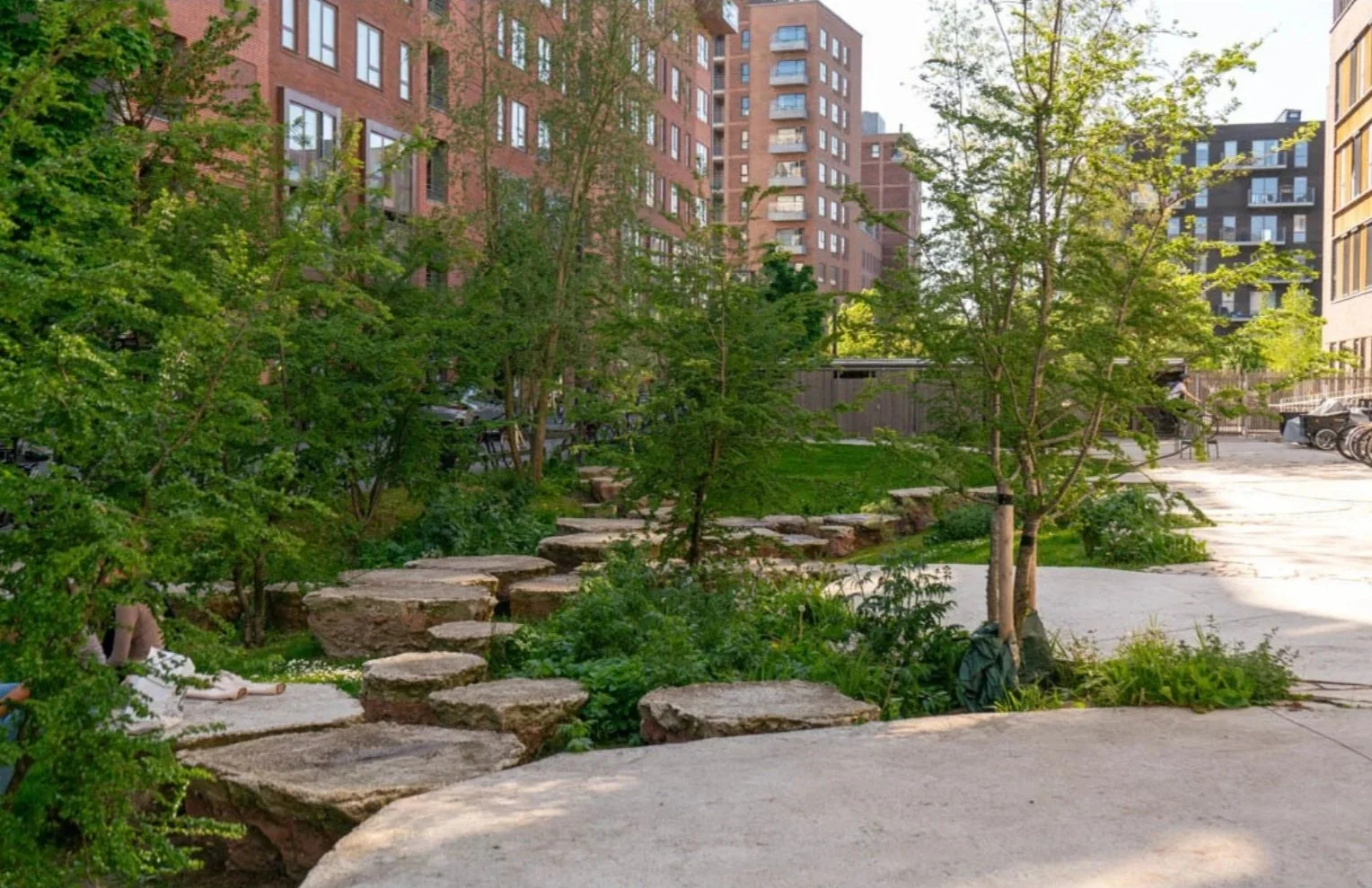
Mellemrummet
During heavy rainstorms, many cities face challenges of flooding in neighborhood streets. Growing up, I have had many experiences where I would step out of my home after a downpour, and find many of my usual walking routes impassable with pools of water.
On a recent trip to Copenhagen, Denmark, I explored three parks that did something incredibly eye-opening: they are designed to flood on purpose. By intentionally designing open green spaces in a city to act as sponges during rainstorms, these parks not only improve flood resilience within the city, but also simultaneously enhance social spaces for play, community gathering, and habitat.
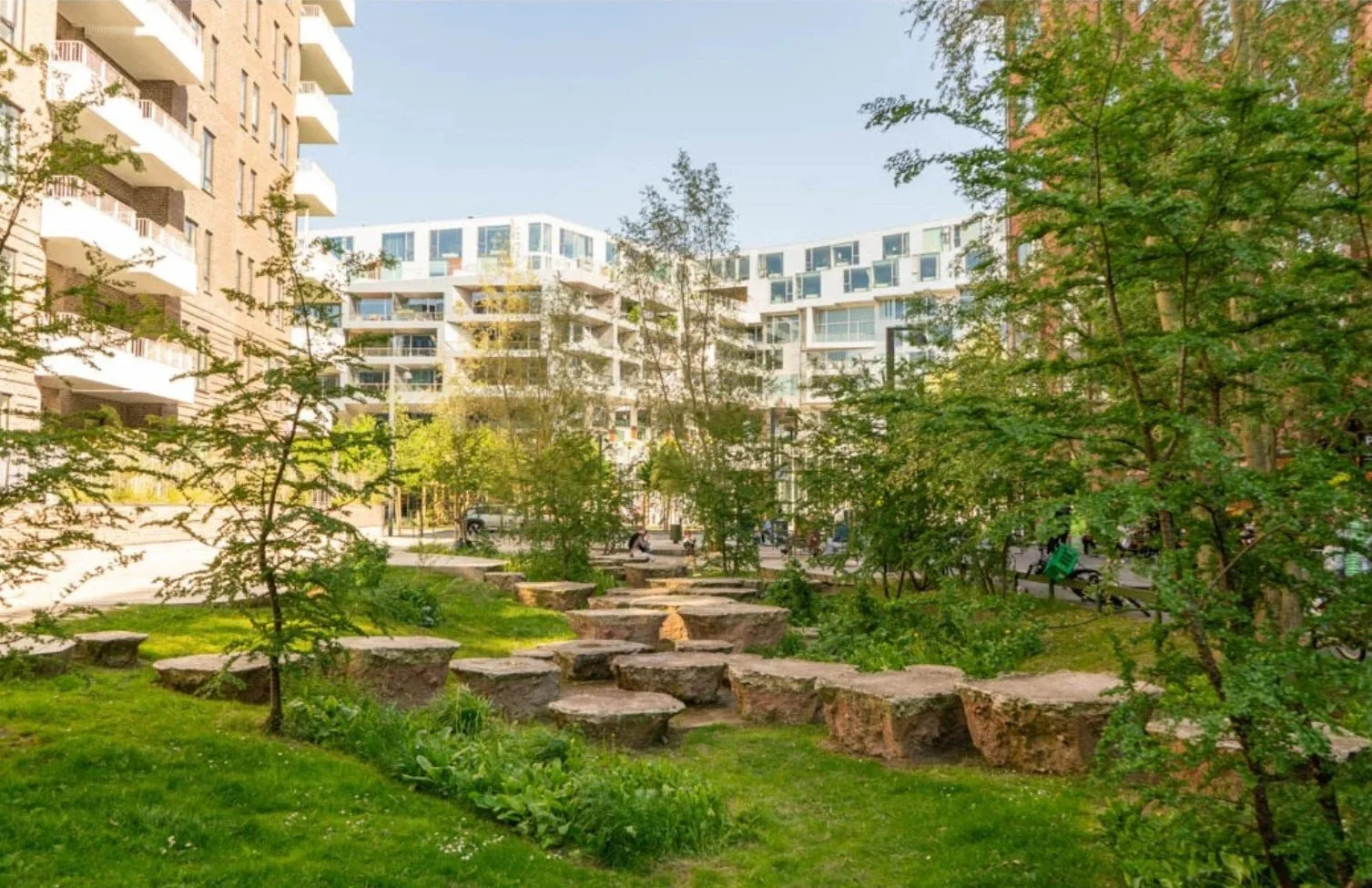
This small courtyard sits quietly within towering residential buildings. Dramatic boulder-like forms dance across a sunken lawn and a grove of trees.
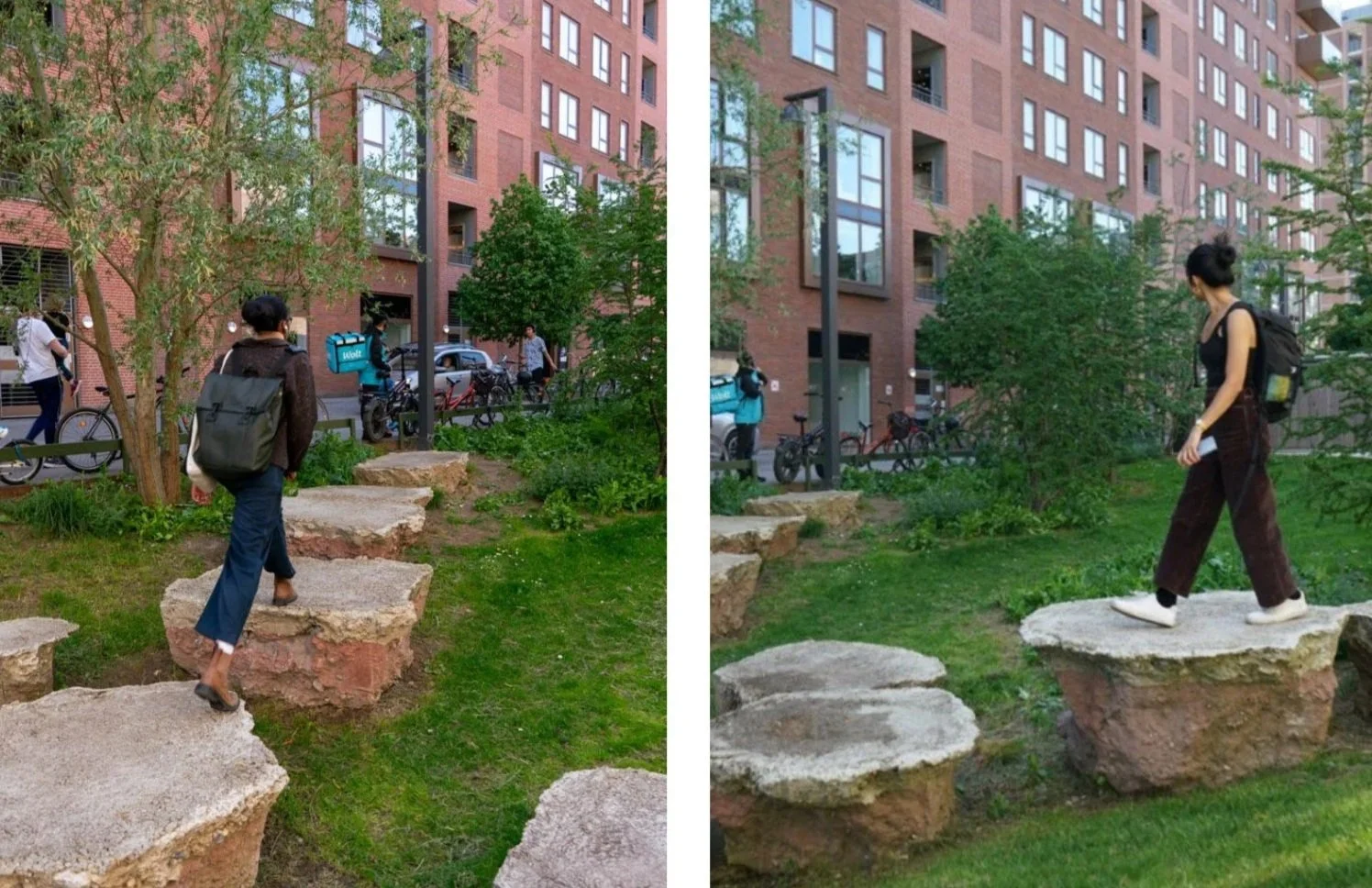
During dry months, in addition to being a dramatic visual feature, these boulder forms serve as informal seating and provide high pedestrian connectivity in an active area of the neighborhood.
During rainstorms, edges of the courtyard slope to direct rain water towards the center. Once the basin floods, the boulder forms will remain a striking visual feature as they stay above the water, and serve as stepping stones to maintain pedestrian access through the park.
Designed by: BOGL
Scandiagade
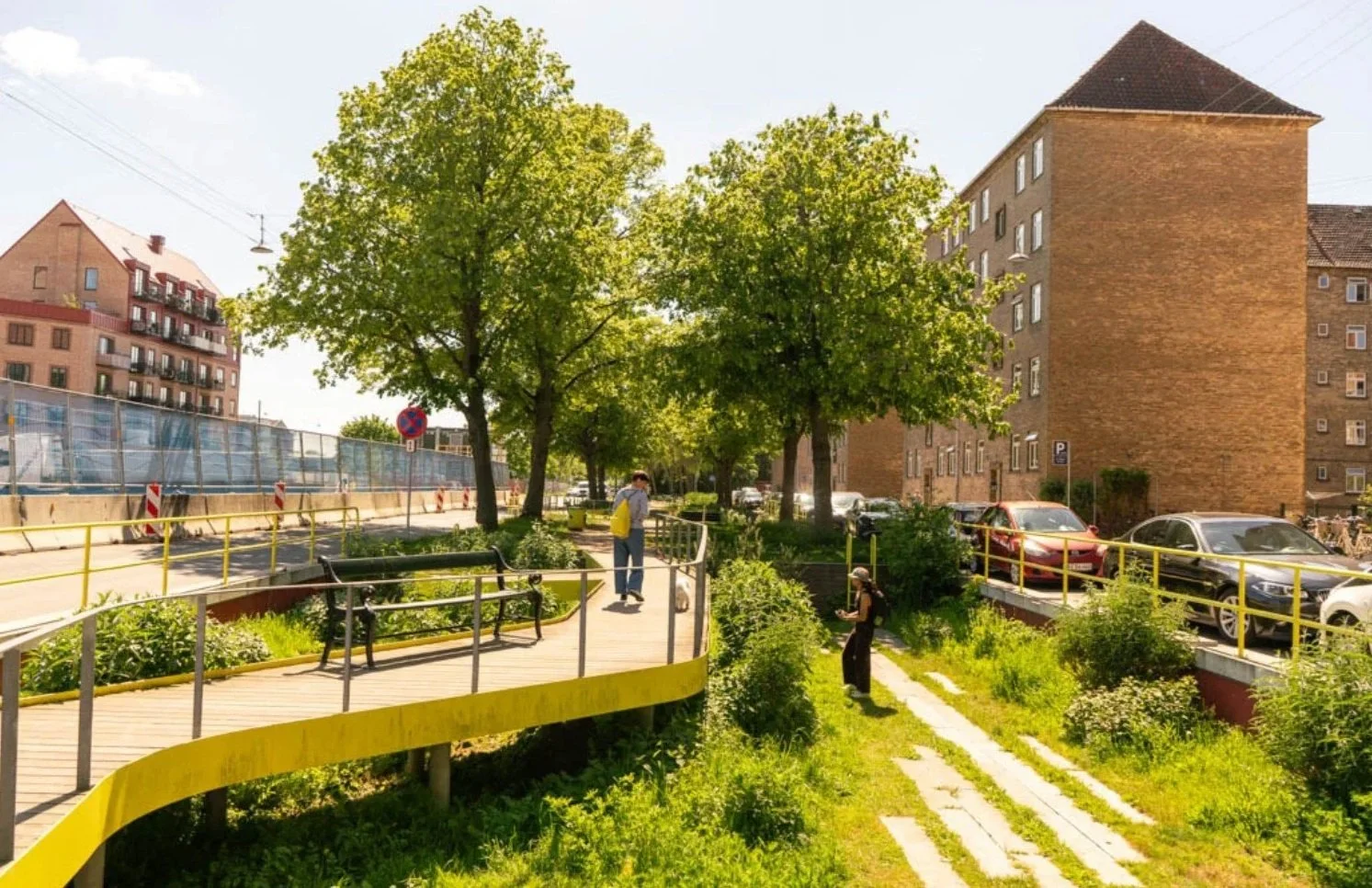
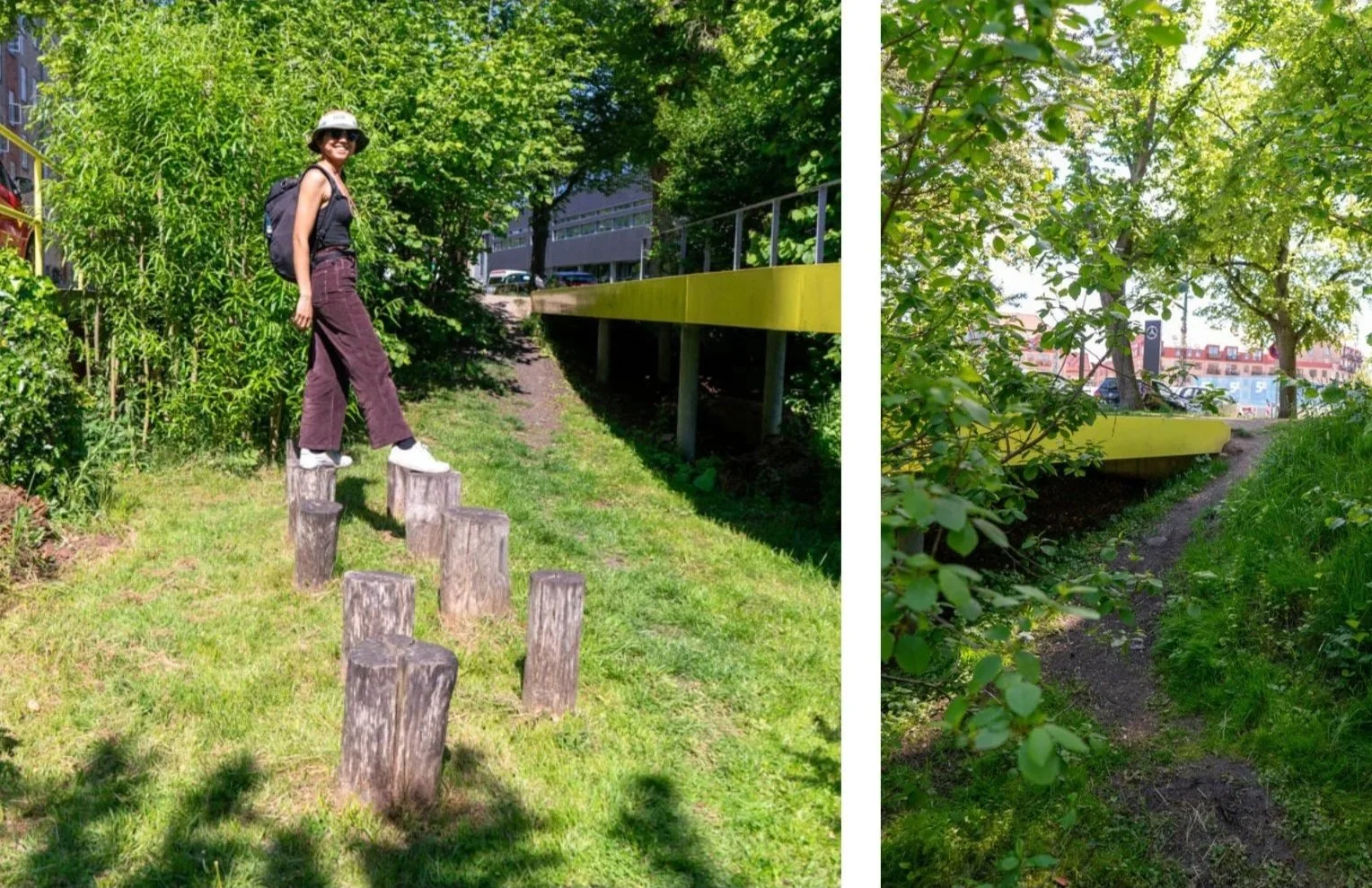
This long, linear park is sandwiched between two vehicular roads, unified by a colorful yellow boardwalk. Several “rooms” undulate the park, filled with various textures of paving, plant palettes, and play features.
During dry months, willow huts, stepping stumps, and hidden pathways offer an inviting space for families to bring their kids outside. Community garden beds provide a place for the neighborhood to connect with one another.
During rainstorms, water from the surrounding streets and parking lots is intentionally channeled into these sunken gardens. This park allows both humans and rainwater to occupy a space in harmony throughout the seasons. Designed by 1 : 1 Landskab
Grønningen-Bispeparken
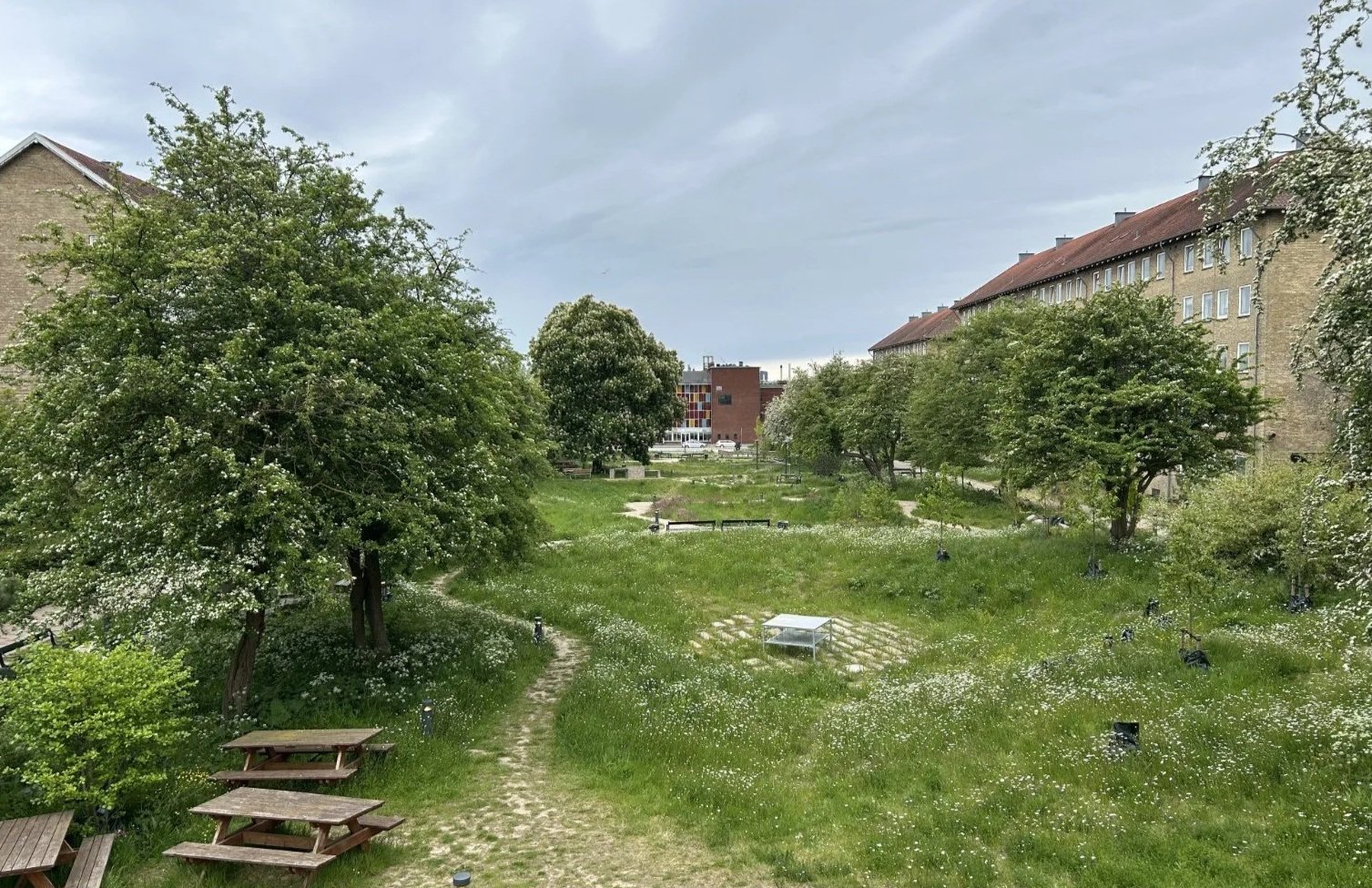
Nestled in a quiet neighborhood and historic buildings, this community park takes the most subtle and light-handed approach to the land.
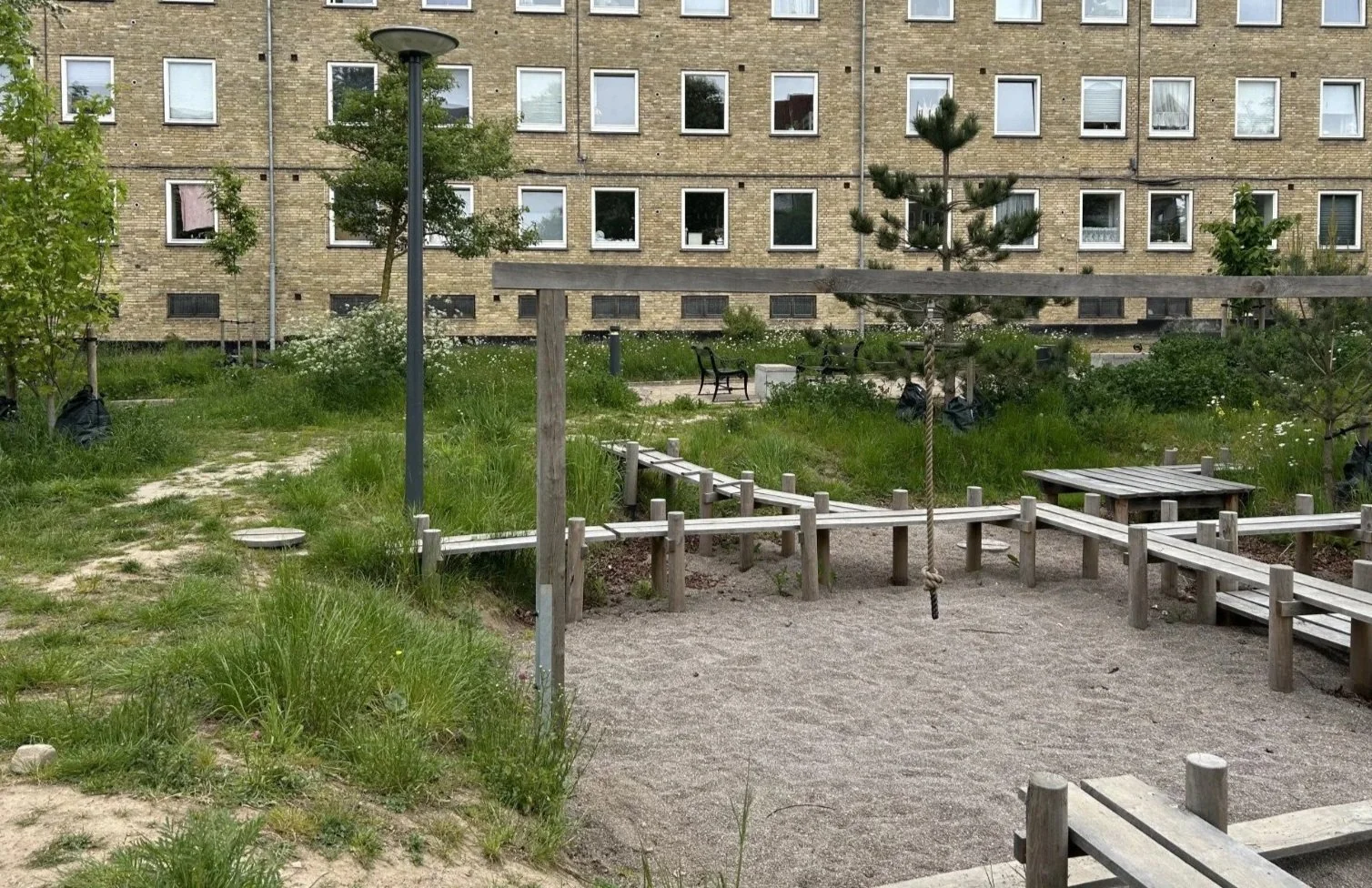
During dry months, shallow, open basins serve as flexible lawn space, or informal sports fields for local residents. Natural wooden play structures scatter the park with joyful moments of discovery.
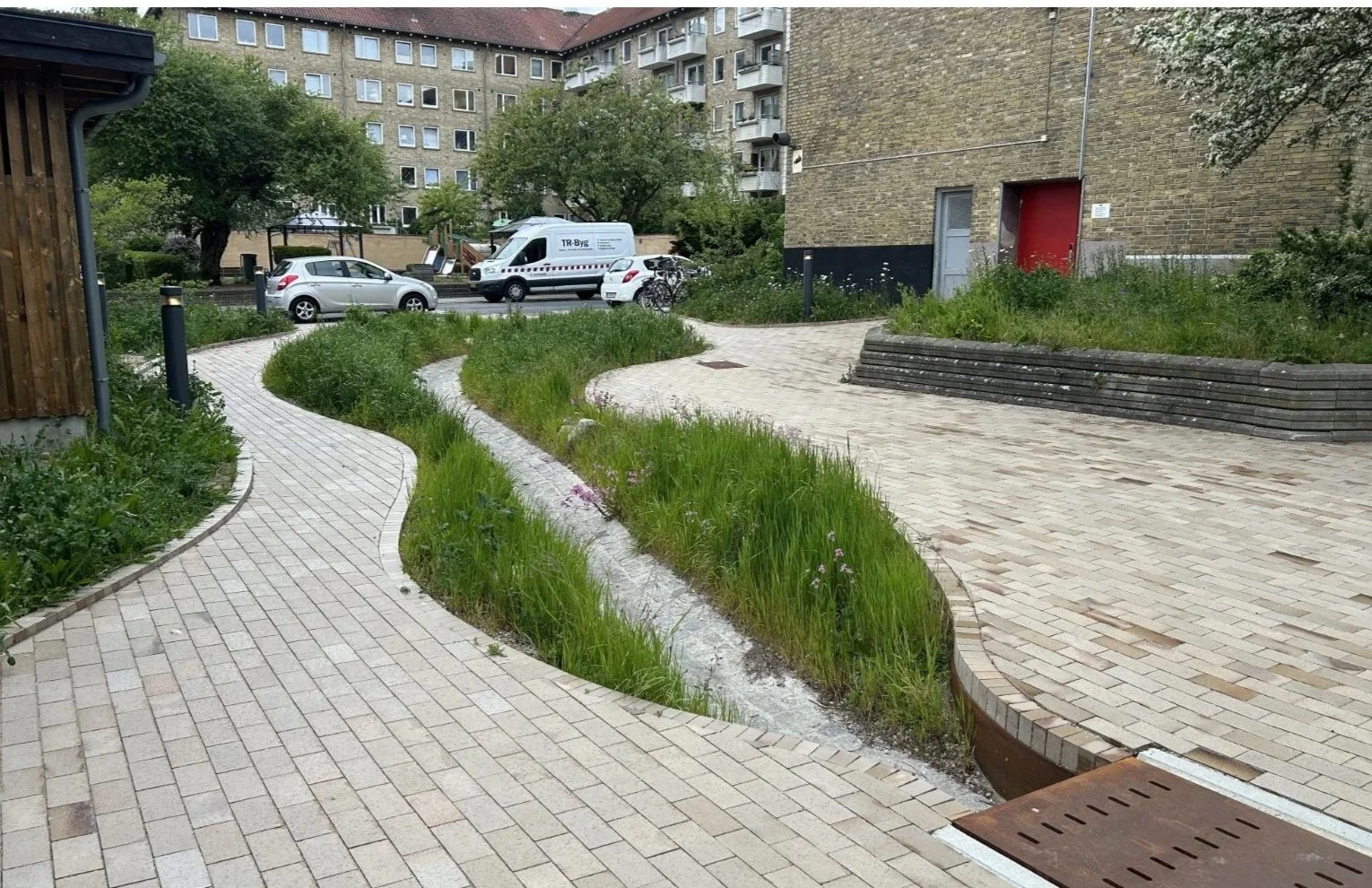
During rainstorms, adjacent neighborhood parking areas direct rain water into beautiful cobble-lined runnels that lead into the park. The open basins are left to flood as shallow ponds, letting the park become a huge sponge. Elevated decks allow access to play areas even after heavy rain. Designed by SLA
As landscape architects, traveling outside of the cities we practice in provides invaluable insight to new design strategies and approaches that are unfolding across the world. By designing spaces with flexibility and imagination such as these, we can protect our neighborhoods from flooded infrastructure and still provide beautiful places to play, gather, and enjoy open green space. Through my career, I hope to continue instilling as much beauty as I felt in these parks, while improving the longevity of the land our gardens are built on.